
Breast
 Cancer Stages
Breast cancer is classified into stages 0–IV, describing how far it has spread and guiding treatment options.


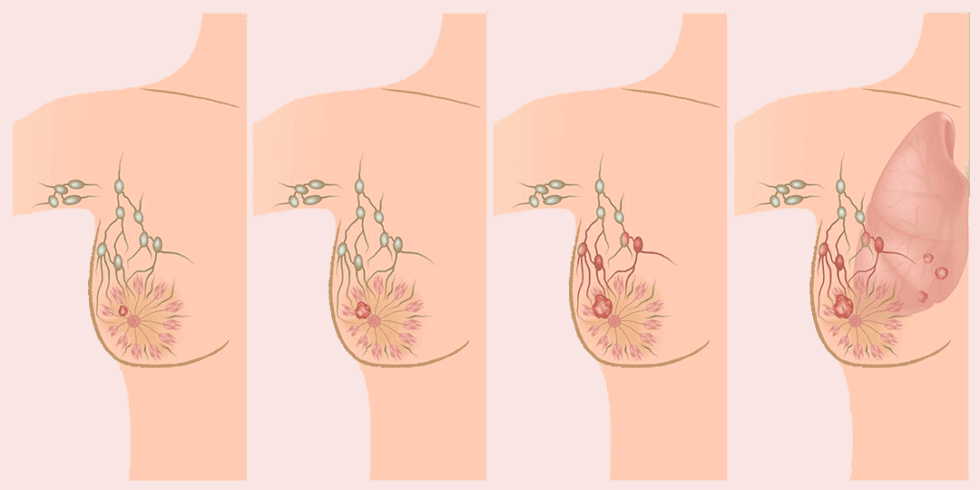
Detailed Stages of Breast Cancer
Stage 0 – Non-Invasive
Cancer cells are only in the place they started and haven’t spread.
Example: DCIS (ductal carcinoma in situ), where abnormal cells are inside the milk ducts.
Usually does not cause symptoms or lumps.
Often detected during routine mammograms.
Early treatment can prevent it from becoming invasive.
Stage I – Small Invasive Cancer
IA:
Tumor is small (≤ 2 cm) and hasn’t spread to lymph nodes.IB:
Tiny groups of cancer cells are in lymph nodes, or there is a small tumor in the breast with tiny cancer cells in nodes.Early detection at this stage has a very high survival rate.
Stage II – Moderate Invasive Cancer
IIA:
No tumor in the breast, but cancer > 2 mm is found in 1–3 nearby lymph nodes, OR
Tumor ≤ 2 cm has spread to lymph nodes, OR
Tumor 2–5 cm, no lymph node involvement.
IIB:
Tumor 2–5 cm with small cancer clusters in lymph nodes, OR
Tumor 2–5 cm with 1–3 lymph nodes affected, OR
Tumor > 5 cm, no lymph nodes involved.
Stage III – Locally Advanced Cancer
IIIA:
Tumor of any size with 4–9 lymph nodes affected, or tumor >5 cm with small clusters in nodes.IIIB:
Tumor has spread to chest wall or skin, may cause swelling or ulcer; up to 9 lymph nodes affected.IIIC:
Tumor of any size with more than 10 lymph nodes affected, including nodes near collarbone or breastbone.Stage IV – Advanced / Metastatic Cancer
Cancer has spread beyond the breast and nearby lymph nodes to other organs.
Common areas include lungs, liver, bones, brain, or distant lymph nodes.
Sometimes detected at first diagnosis, or it can develop if earlier breast cancer returns.
Symptoms may include bone pain, shortness of breath, fatigue, or organ-specific issues depending on where it spreads.
Treatment focuses on controlling cancer and maintaining quality of life; survival rates vary depending on spread and response to therapy.
Common questions
Frequently asked questions
01 How serious is Stage 0 breast cancer?
Stage 0 is non-invasive, meaning the abnormal cells are only in one spot and haven’t spread. Early treatment can prevent it from becoming invasive.
02 What does it mean if someone has Stage IV breast cancer?
Stage IV means the cancer has spread beyond the breast and nearby lymph nodes to other organs, like bones, liver, lungs, or brain.
03 How do doctors decide what stage my breast cancer is?
Doctors look at the tumor size, lymph node involvement, and whether the cancer has spread to other parts of the body to determine the stage from 0 to IV.