
Signs
 And Symptoms
Women should perform monthly self-exams. Ages 25–40 with no risk factors should have a clinical breast exam every 1–3 years. Women over 40 should have more frequent exams and an annual mammogram to catch cancer early, even if there are no symptoms.


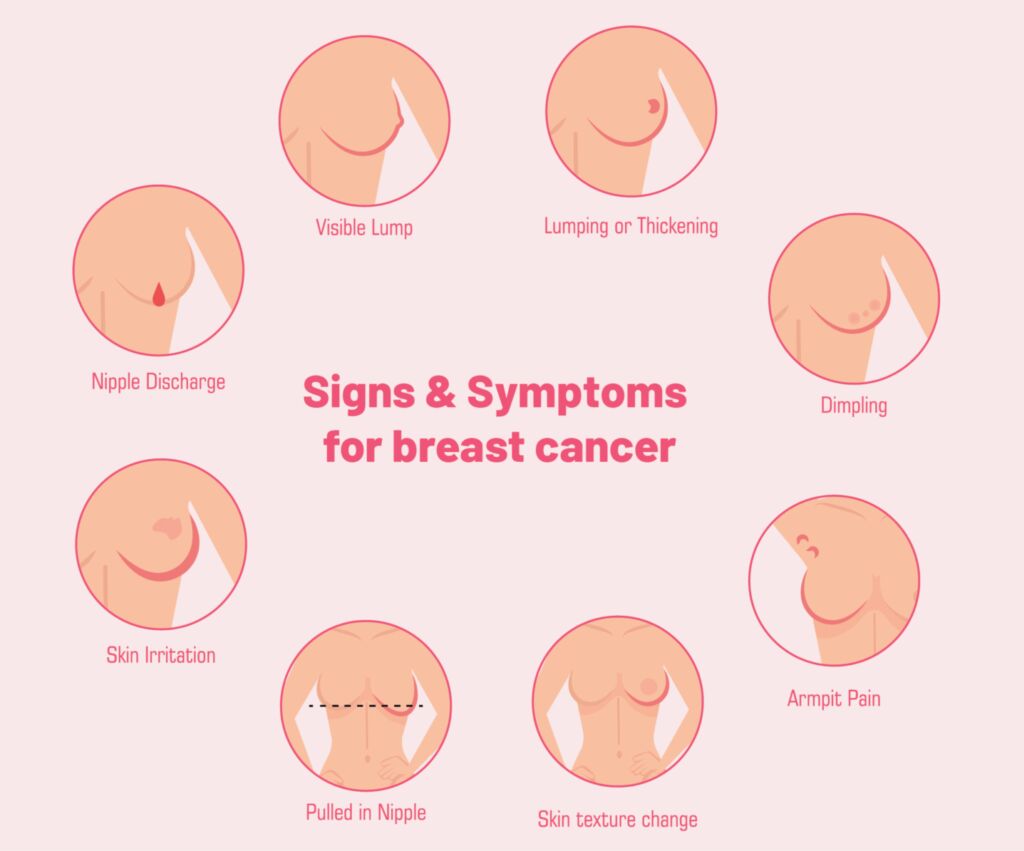
Common Symptoms Every Woman Should Notice
New Lump or Mass
Common symptom of breast cancer is a new lump or a mass that is painless, hard, and has irregular edges. but it can be tender, soft, or rounded and can even be painful.
Change in Breast Shape or Size
Change in breast shape, a sudden increase in breast size, breast heaviness (one more than the other), firmness or hardening of one breast
Skin Changes
Scaliness, lumping or thickening of the nipple or breast skin, skin dimpling, redness, orange-peel skin or change in skin texture, skin irritation (constantly itching breast skin)
Nipple Changes
Nipple discharge other than breast milk, nipple retraction (turning inward), change in how the nipple looks, change in the direction of the nipple
Swollen Lymph Nodes or Pain
Lump, swollen lymph nodes or pain in the armpit or above the collarbone
Breast or Nipple Pain
Breast or nipple pain other than your menstrual cycle, the warmth of one breast
Common questions
Frequently asked questions
01 How often should I do a self-exam?
Women should perform a breast self-exam once every month to notice any changes early.
For women who menstruate: Do the exam a few days after your period ends, when your breasts are least tender or swollen.
For women who don’t menstruate: Pick a fixed day each month to check consistently.
02 When should I get a clinical breast exam?
Women aged 25–40 with no special risk factors should have a clinical exam every 1–3 years. Women over 40 should have exams more frequently.
03 Do I need a mammogram even if I have no symptoms?
Yes, women over 40 should have an annual mammogram, as breast cancer may develop without any noticeable symptoms.